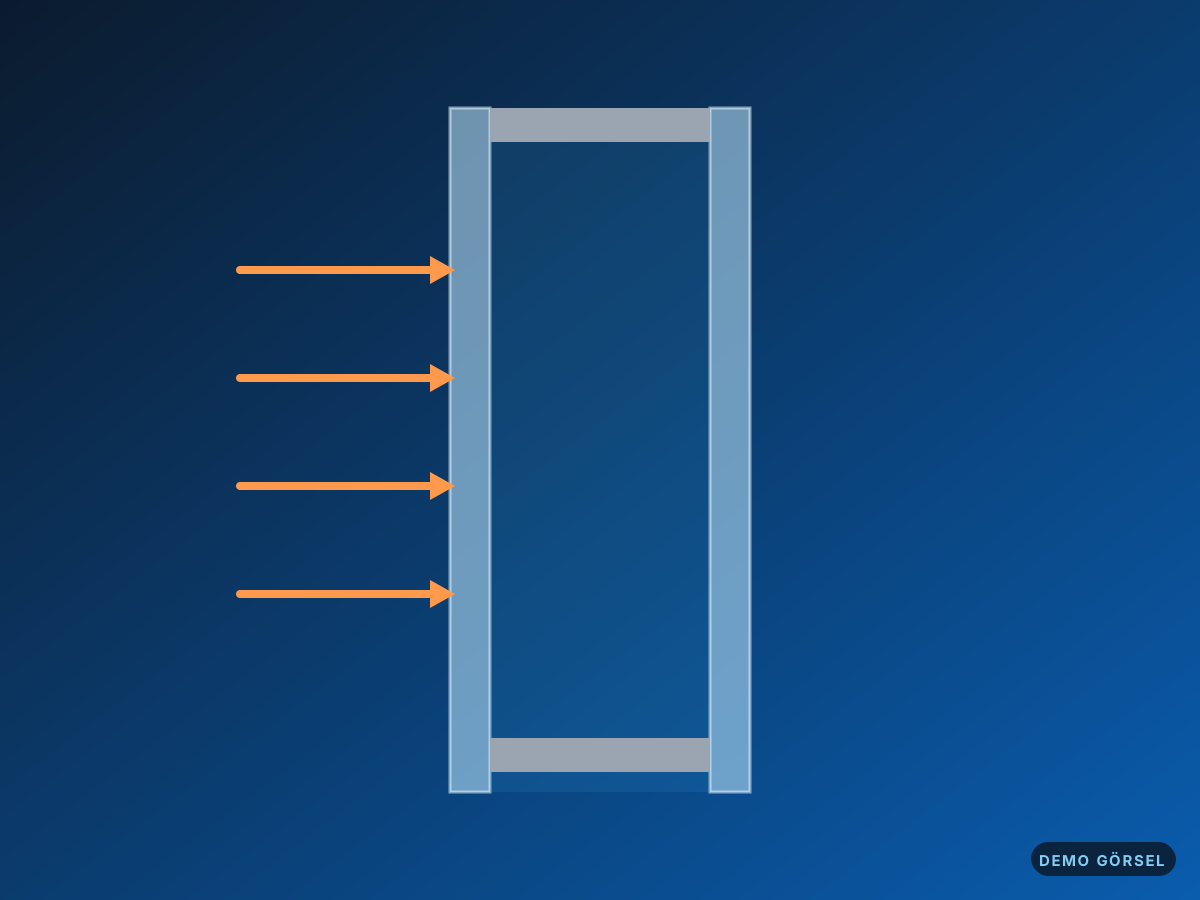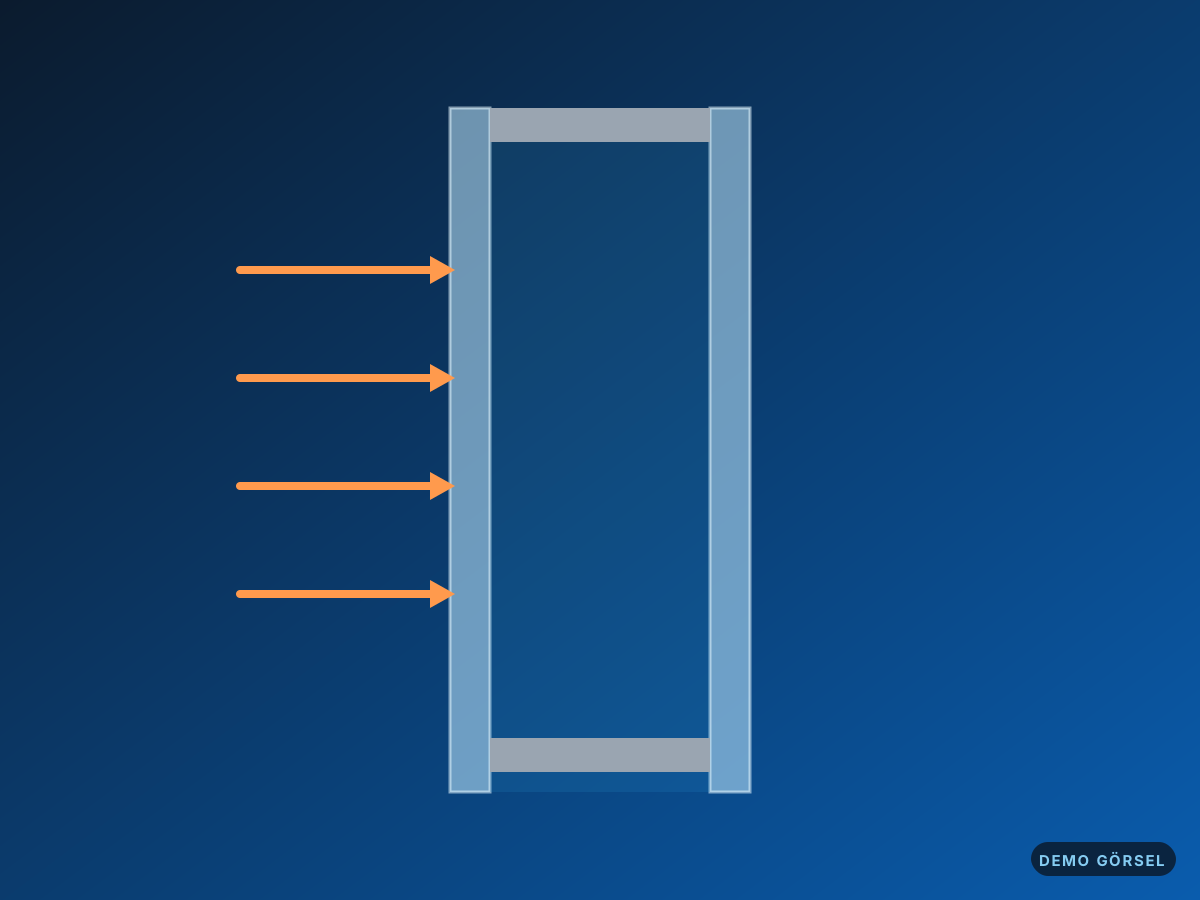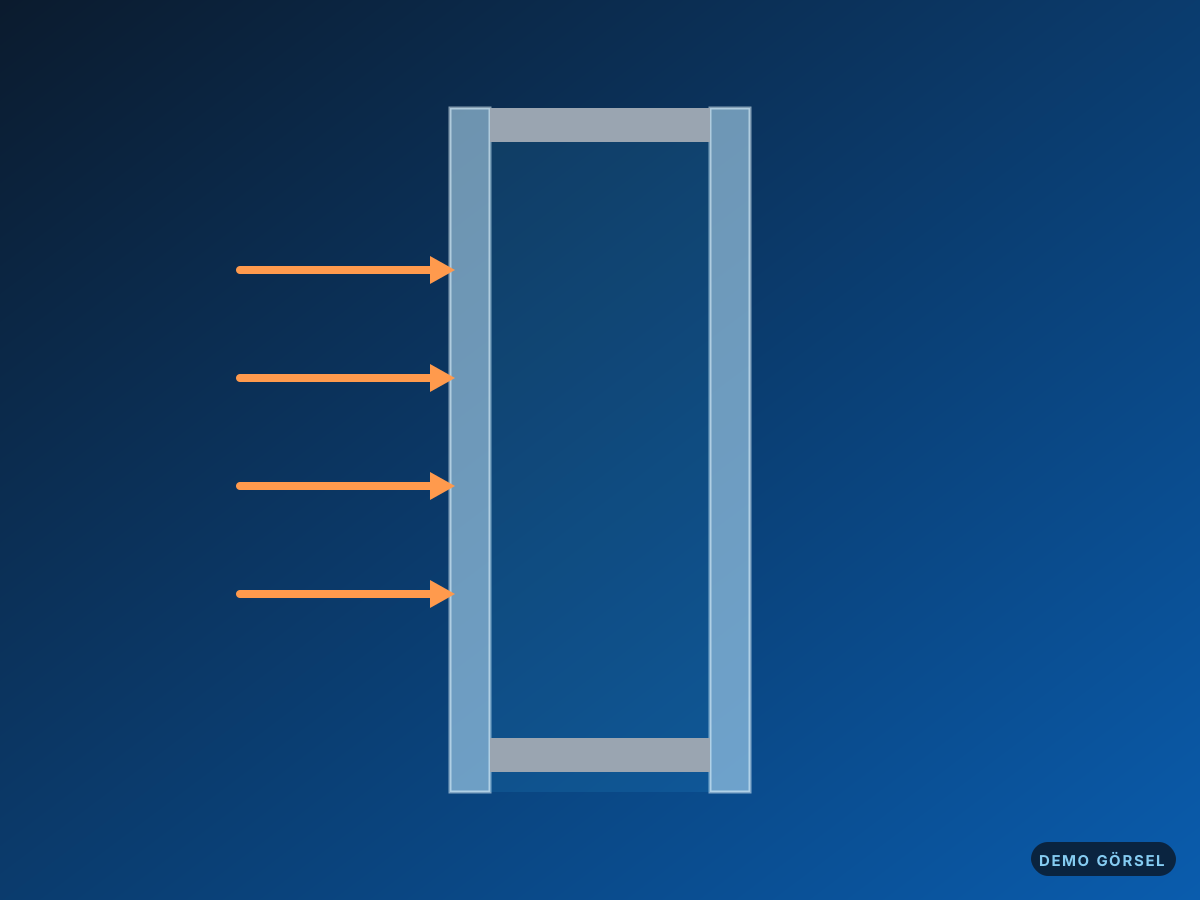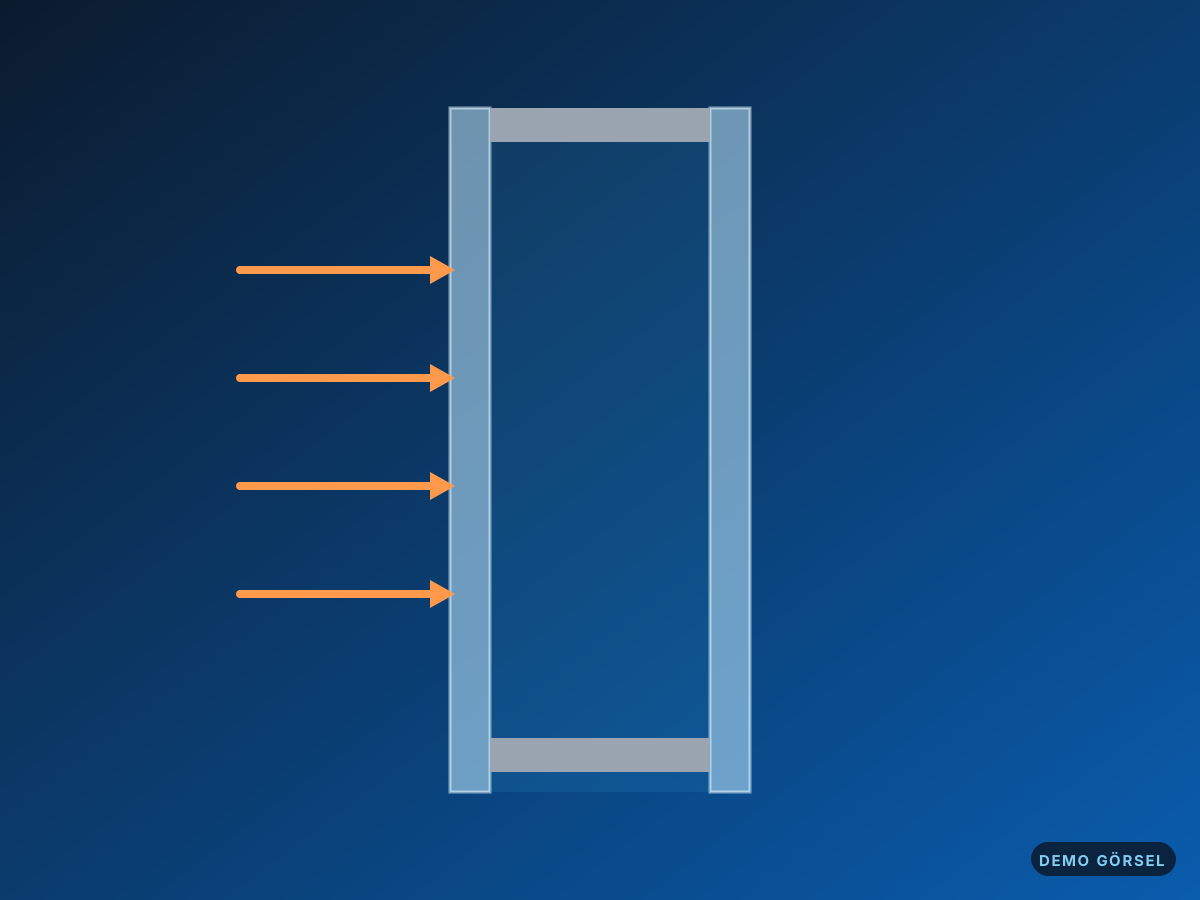
4+16+4 double glazing is standard insulating glass made by placing a 16 mm spacer between two 4 mm float panes and sealing the edges with a two-stage sealant. The layer of dry air between the panes slows heat transfer and cuts heat loss by about half compared with single glazing.
Where Is It Used?
It is the basic glass in most PVC and aluminium windows, doors and sliding systems. It is an economical, adequate solution for north-facing facades, rooms without sun, storerooms and utility spaces. It is also the most common choice when renovating old single-glazed windows.
Advantages
- Clear thermal insulation compared with single glazing.
- Less condensation on the inner pane in winter.
- Sound insulation that reduces street noise.
- Economical price and fast production.
- Can be combined with Low-E, tinted, frosted or patterned glass.
Technical Information
The thermal transmittance (Ug) of standard 4+16+4 double glazing is about 2.7 W/m²K. A desiccant in the spacer keeps the air between the panes dry. Choosing a warm edge spacer instead of aluminium reduces the cold bridge at the glass edges and lowers edge condensation in humid homes. Where privacy is needed, such as bathrooms, the outer pane can be frosted or patterned.
Sizes and Installation
Units are produced to the millimetre to fit the sash glazing rebate. During installation the glass is set into the sash on support blocks and fixed with glazing beads. Correct placement of the blocks prevents the sash from sagging over time. Glass replacement in existing joinery usually takes only a short time per window.
Maintenance
Double glazing needs no maintenance and is cleaned with ordinary glass cleaner. If fog, droplets or stains appear between the panes, the seal has failed and the unit must be replaced. In that case the profile and sash stay in place and only the glass unit is renewed.
For higher insulation and sunny facades we recommend considering Low-E comfort double glazing. With a free survey and measurement we can choose the best glass combination together.