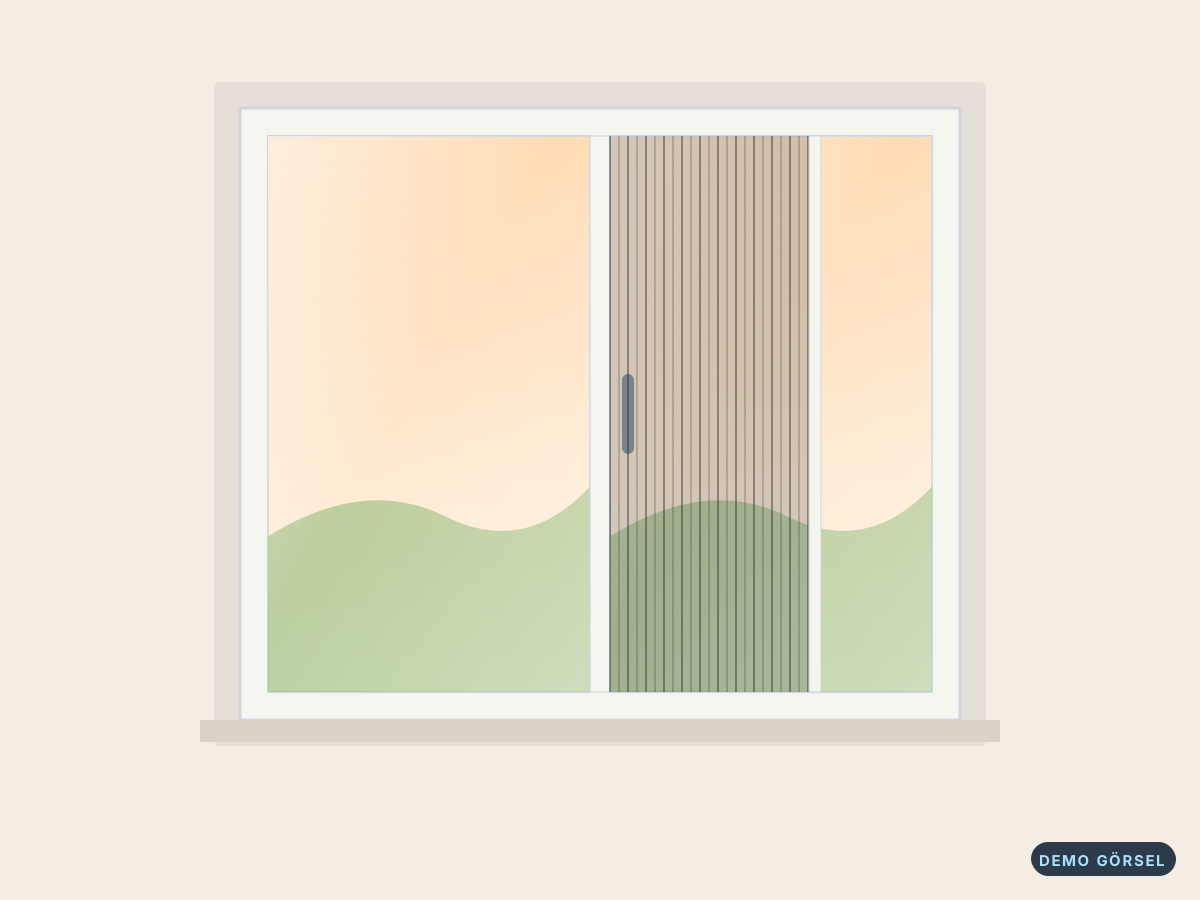
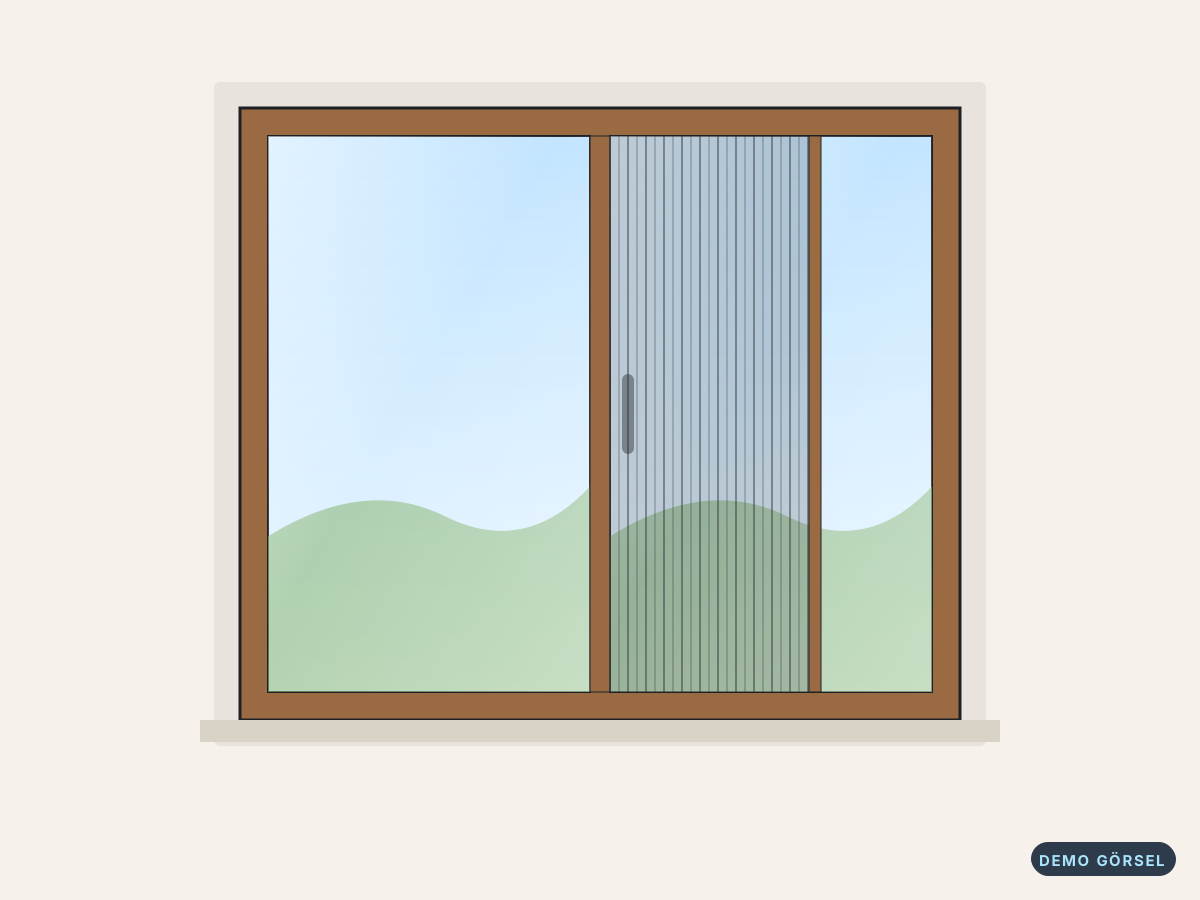
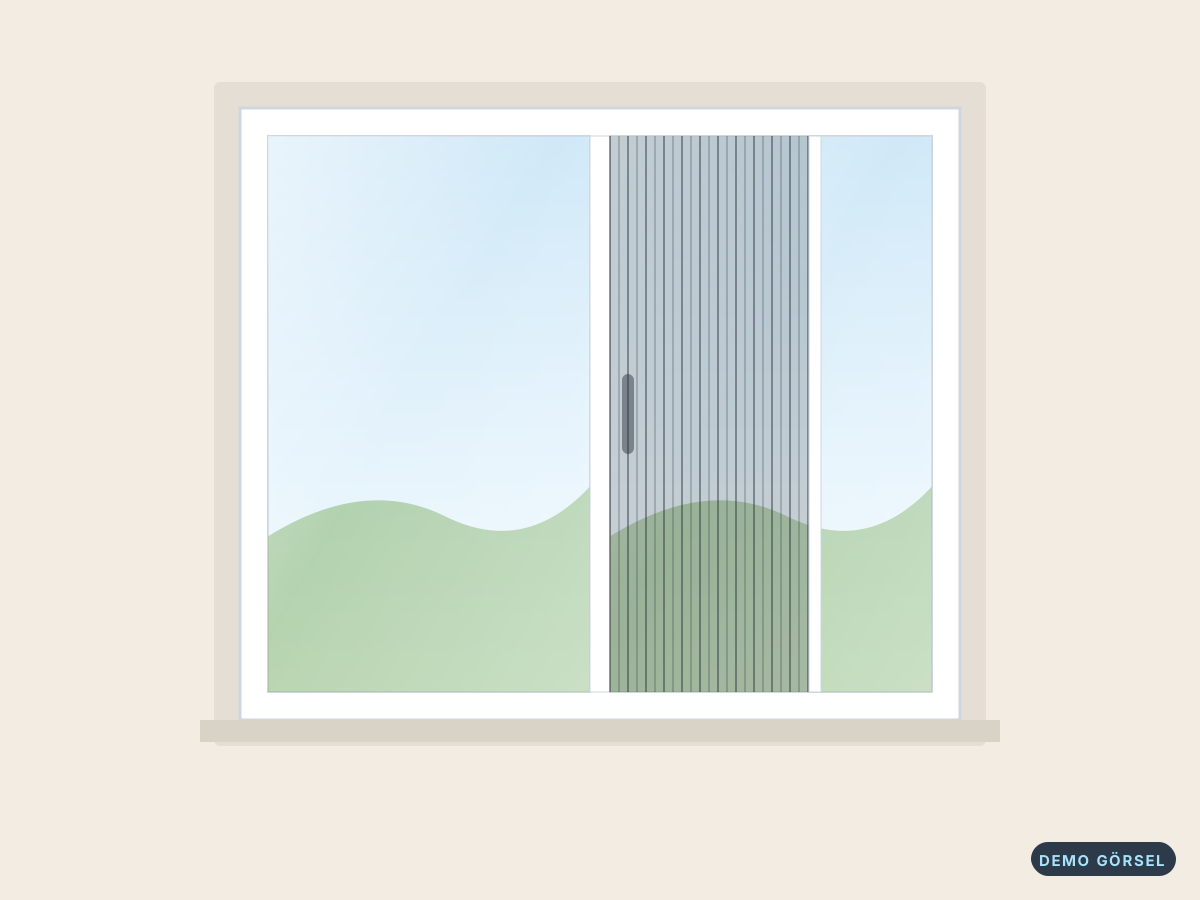
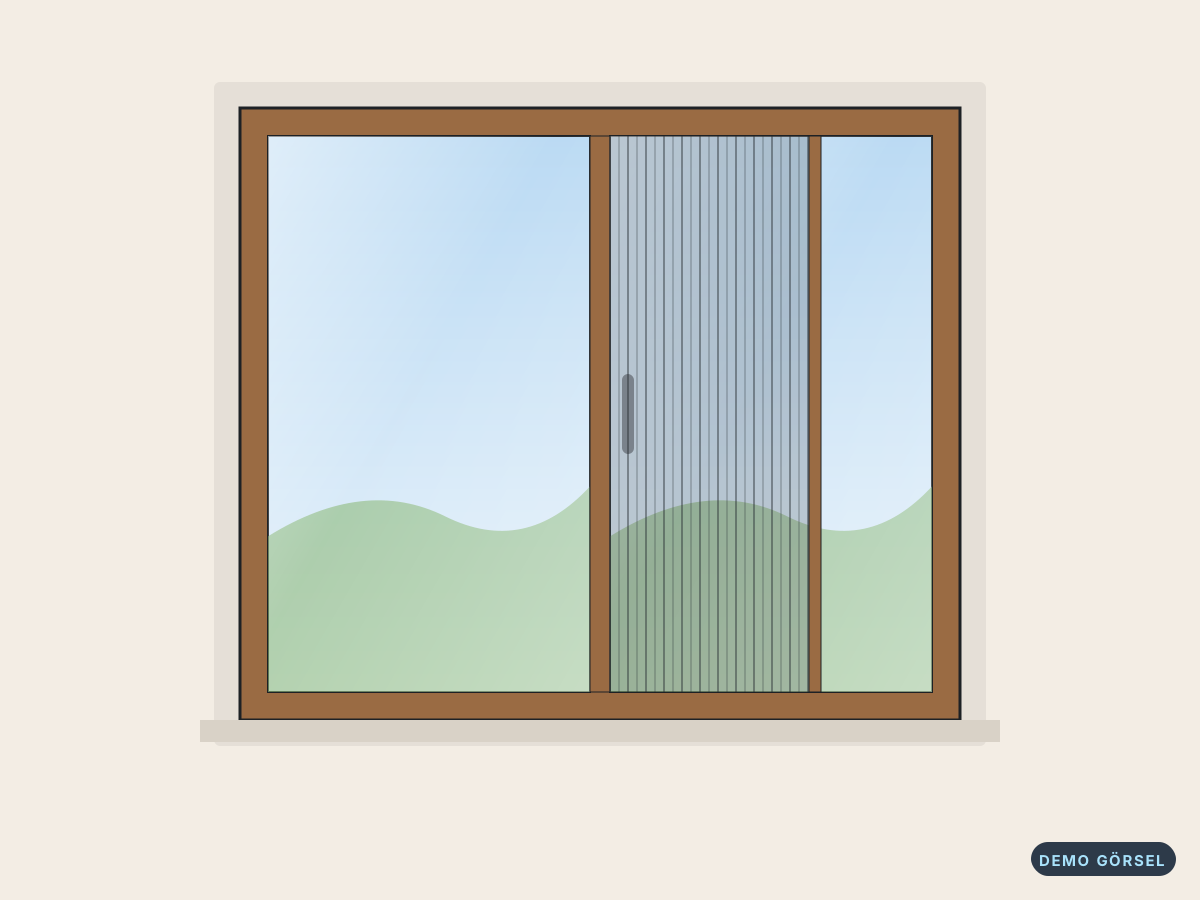
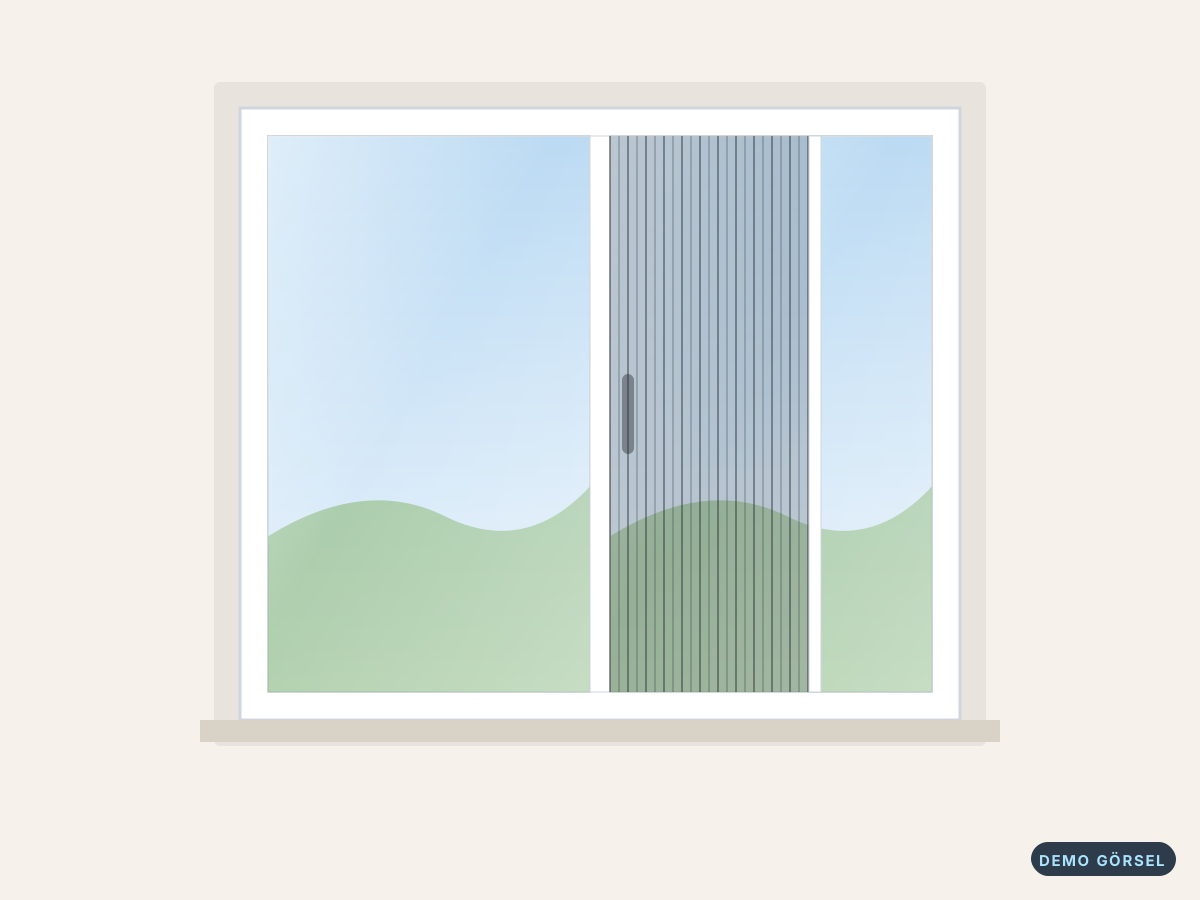
A hinged insect screen consists of mesh stretched within an aluminium frame that opens and closes like a door on hinges. A magnetic closing strip makes the sash settle back into place by itself and stops insects getting in around the edges. Its sturdy build gives a long life on frequently used windows and doors.
Where Is It Used?
It is the most common screen type on the outside of inward-opening tilt and turn PVC windows. When the window opens the screen stays in place, and when you want to clean the glass you simply swing the screen outward. It is also popular for kitchen doors and garden exits. In lakeside homes in Köyceğiz and Dalyan, fitting hinged screens to bedroom windows makes it possible to leave windows open on summer nights.
Advantages
- Long service life thanks to a sturdy frame.
- Tight edges with magnetic closing.
- Opens easily for cleaning the glass.
- Brush seal for a snug fit to the frame.
- Economical and maintenance-free.
Sizes and Installation
A hinged screen is mounted on the outer face of the window frame or on the reveal. For windows it is usually made 50–120 cm wide; for doors up to 100 cm wide and 220 cm high. On doors a middle rail is added to keep the mesh taut and increase impact resistance at the bottom. During the survey the handle, shutter guide and sill positions are checked and the opening direction is set accordingly.
Care
Brushing the mesh with a soft brush and checking the hinges once a year is enough. If dust collects on the magnetic strip, wipe it with a damp cloth. If the mesh tears, only the mesh needs replacing while the frame stays in place, so the screen can be used for many years.
In homes with pets, the hinged screen can be fitted with pet mesh; the frame stays the same and only the mesh type changes. In guesthouse rooms, magnetic closing largely stops guests leaving the screen open.
A hinged insect screen offers one of the best balances of cost and durability. We visit addresses in and around Ortaca for a free survey and measurement.