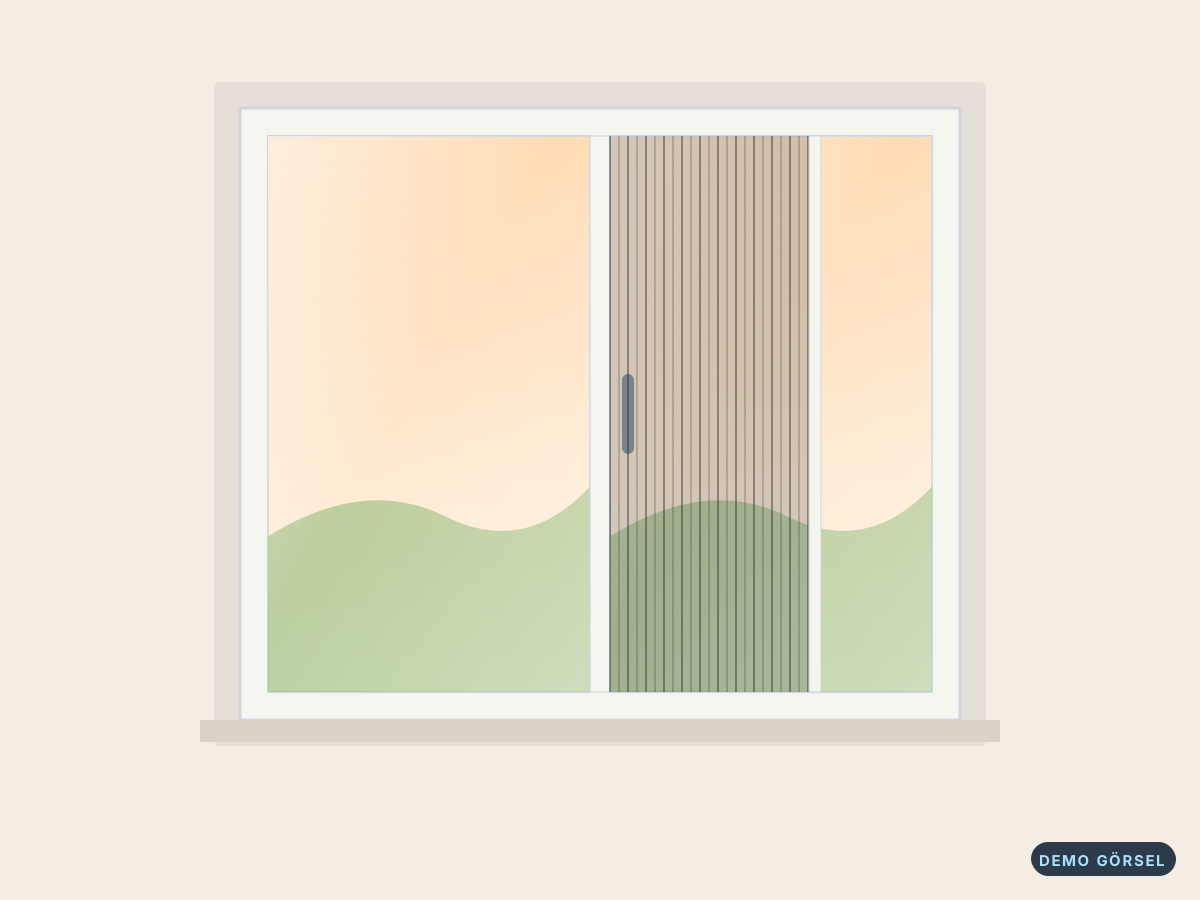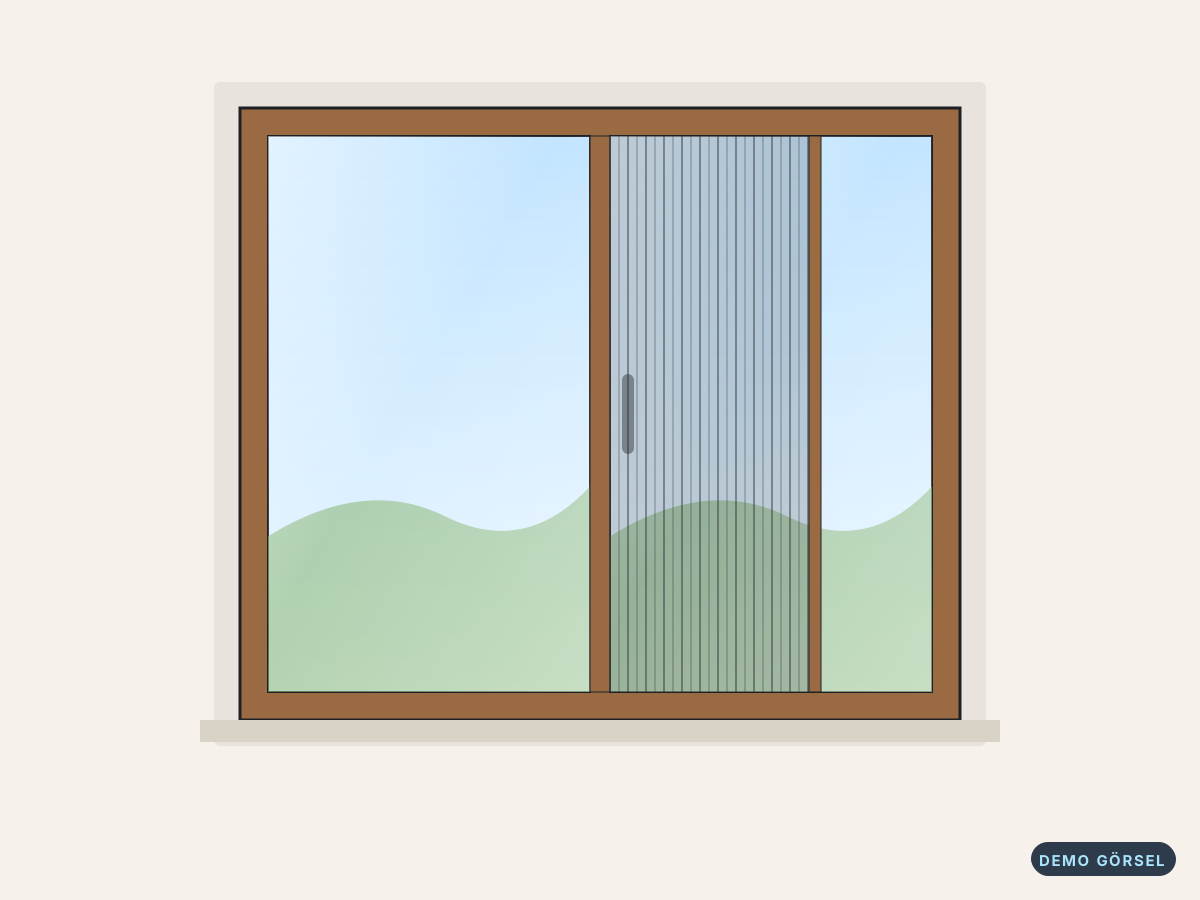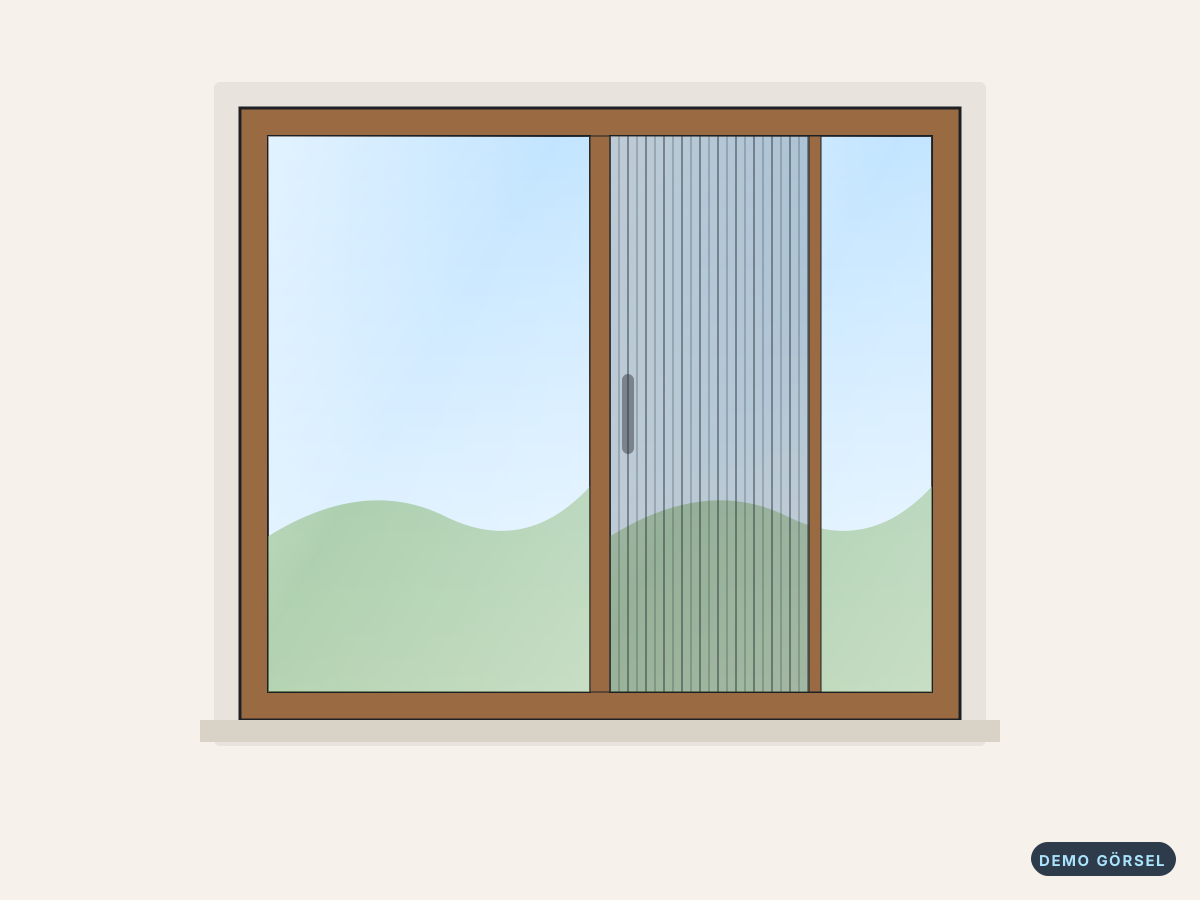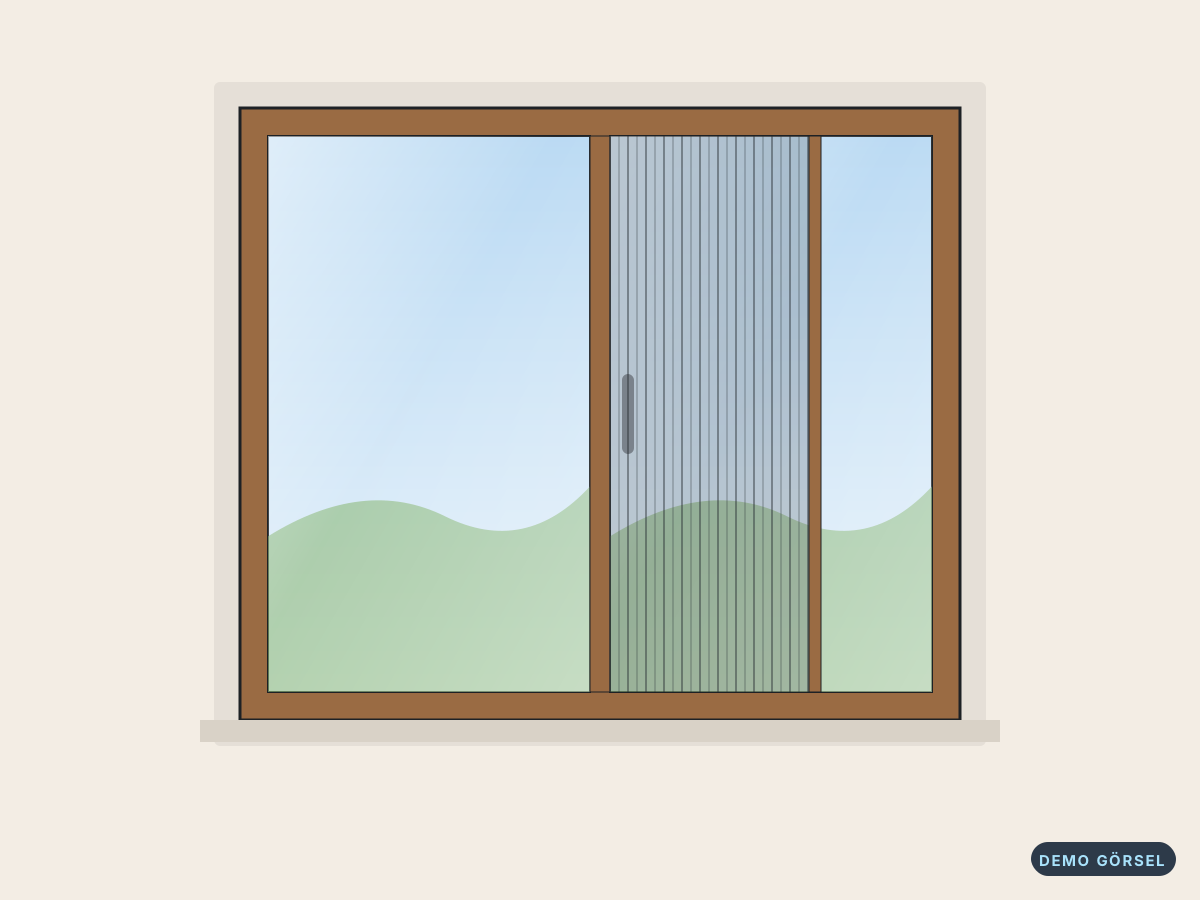
A door insect screen is a specially reinforced screen system for balcony, garden and kitchen doors that are opened and closed many times a day. Because it is larger than window screens and used more intensively, the frame profile is thicker, the hinges are stronger and the mesh is supported by a middle rail.
Types
- Hinged door screen: opens like a door and closes by itself with spring hinges or a door closer.
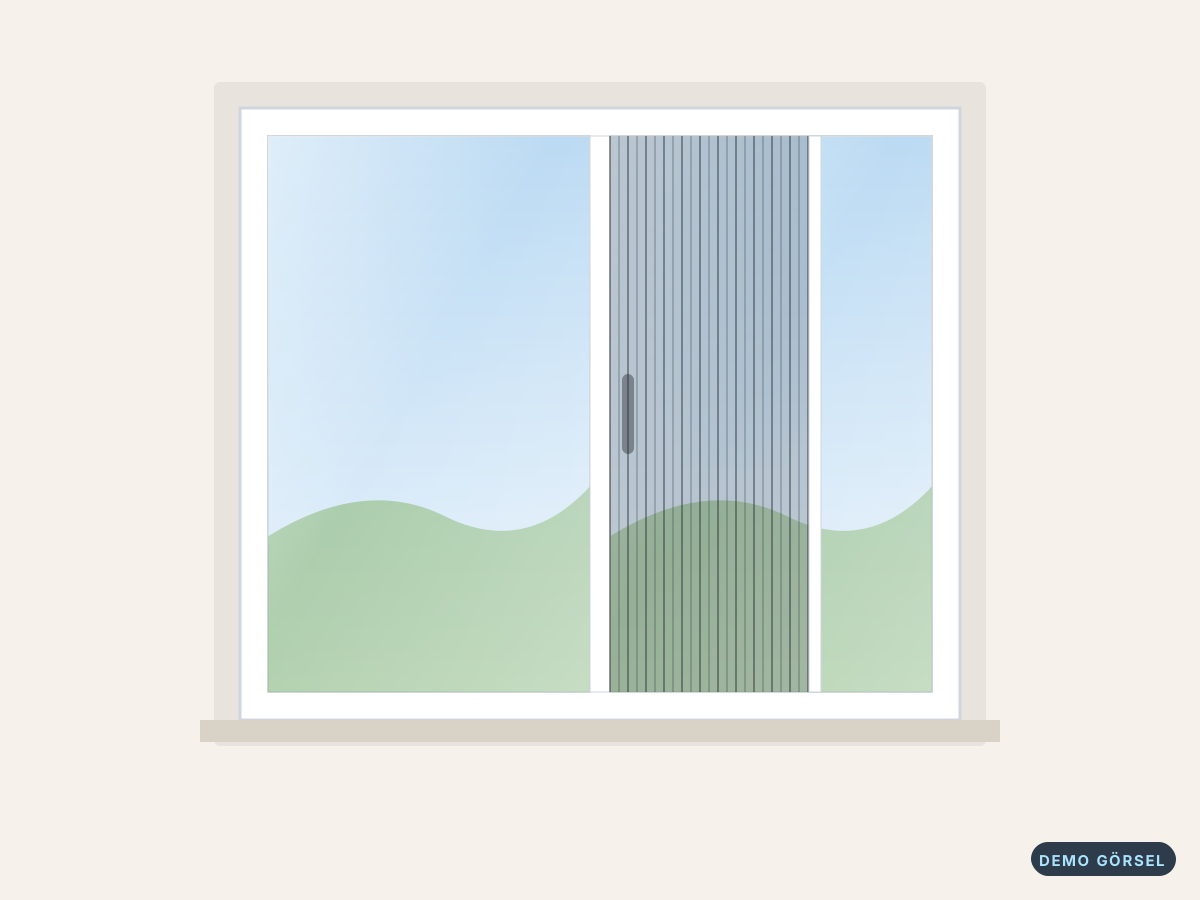
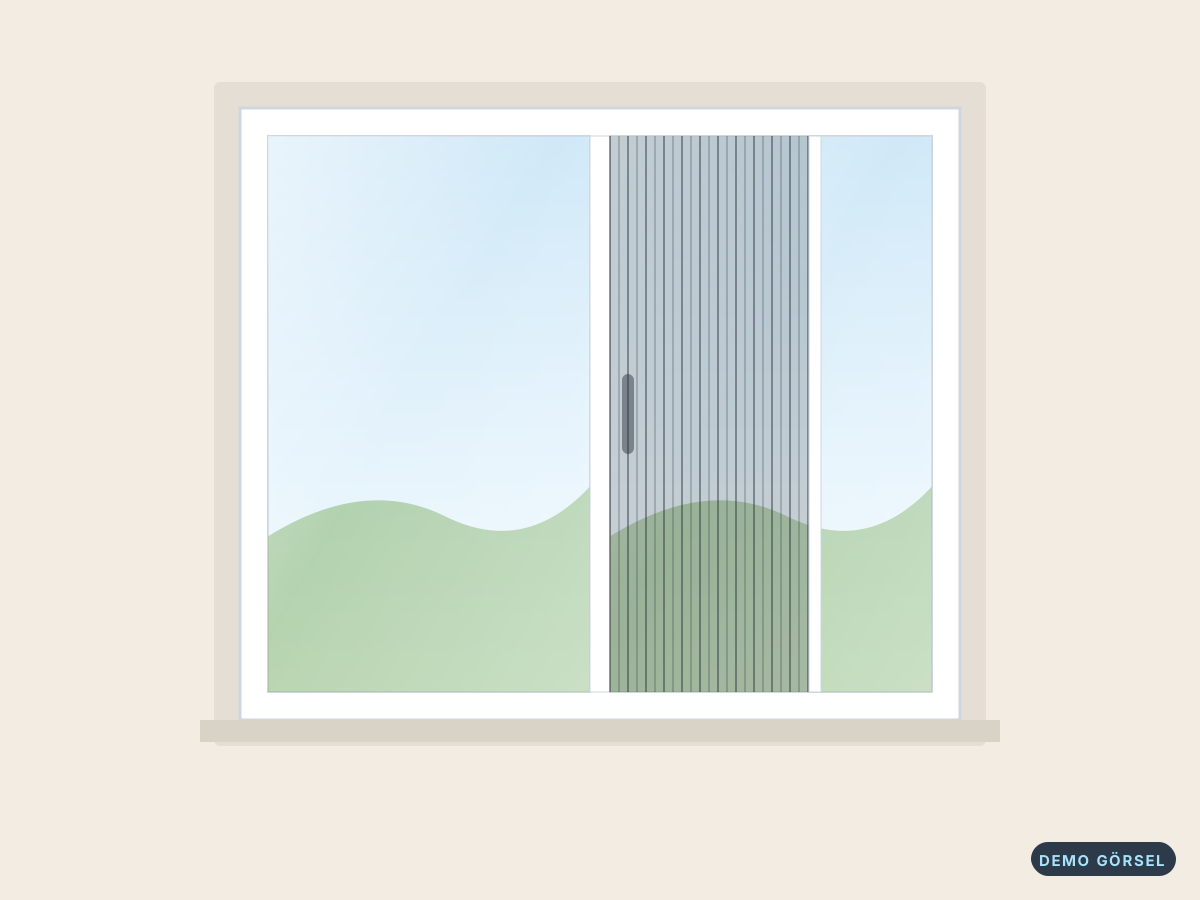
- Pleated door screen: low threshold, slides sideways; nothing to trip over.
- Sliding door screen: moves on a track together with sliding doors.
Where Is It Used?
Kitchen doors to the garden, balcony doors, terrace doors of guesthouse and hotel rooms and restaurant kitchen doors are the main applications. In Ortaca and Köyceğiz, during summer months when people constantly go in and out between house and garden, a self-closing door screen largely stops mosquitoes getting in.
Advantages
- Reinforced frame built for frequent use.
- Taut mesh and impact resistance with a middle rail.
- Self-closing with spring hinges.
- Magnetic or latch catch options.
- Pet mesh version for homes with pets.
Sizes and Installation
A single-leaf door screen is usually made up to 100 cm wide and 230 cm high; for wider doors a double leaf or pleated system is recommended. Before installation we check whether the door handle will hit the screen, the threshold height and the door’s opening direction. If necessary, the screen is mounted on the reveal or wall with a separate frame.
Care
The tension of the spring hinges and the speed of the door closer should be checked once a year. The lower mesh is the part most exposed to feet and objects; using pet mesh here extends its life. Worn mesh can be replaced without changing the frame.
For heavily used business doors such as guesthouses and restaurants we recommend a hinged system with a door closer; for homes, a pleated system for easy passage. With a free survey and measurement we choose the right screen type for your door together.